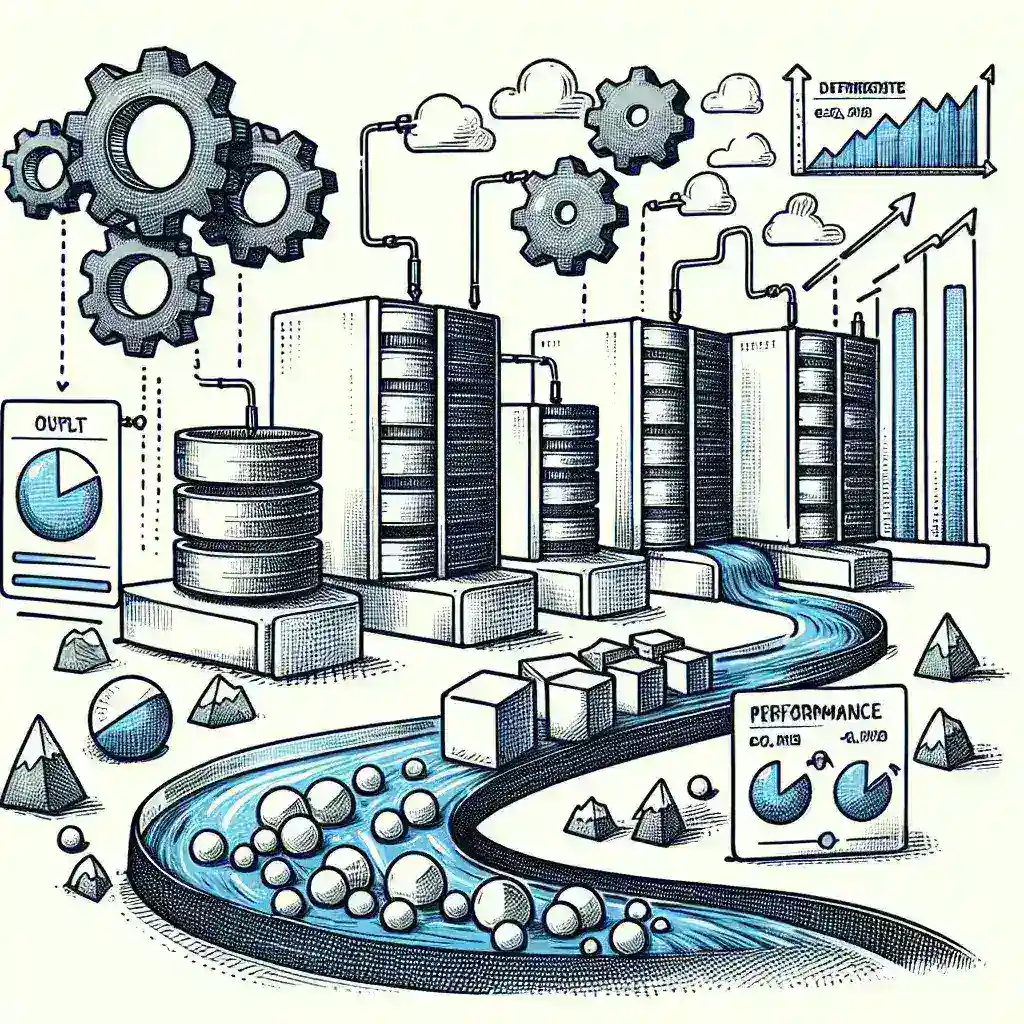
In today’s rapidly evolving digital landscape, the ability to handle massive volumes of data and requests efficiently has become paramount for businesses seeking competitive advantage. High-performance queue management tools represent the backbone of modern distributed systems, enabling organizations to process millions of transactions, manage complex workflows, and maintain system reliability under extreme loads.
Understanding Queue Management in Modern Systems
Queue management fundamentally revolves around the principle of organizing and processing tasks in a systematic manner. Think of it as a sophisticated traffic control system for your data – ensuring that every piece of information reaches its destination without causing bottlenecks or system crashes. Message queues serve as intermediary buffers between different components of an application, allowing for asynchronous processing and improved system resilience.
The evolution from traditional monolithic architectures to microservices has amplified the importance of robust queue management solutions. Modern applications often comprise dozens or hundreds of interconnected services, each requiring seamless communication and coordination. Without proper queue management, these systems would quickly become overwhelmed, leading to performance degradation and potential failures.
Key Characteristics of High-Performance Queue Systems
When evaluating queue management tools, several critical characteristics distinguish high-performance solutions from their conventional counterparts:
- Throughput Optimization: The ability to process thousands or millions of messages per second
- Low Latency: Minimal delay between message production and consumption
- Horizontal Scalability: Capability to distribute load across multiple nodes seamlessly
- Fault Tolerance: Robust mechanisms for handling node failures and data recovery
- Message Persistence: Reliable storage ensuring no data loss during system disruptions
Apache Kafka: The Distributed Streaming Powerhouse
Apache Kafka stands as arguably the most influential queue management tool in the modern tech ecosystem. Originally developed by LinkedIn, Kafka has revolutionized how organizations handle real-time data streams. Its unique architecture enables it to handle millions of events per second while maintaining durability and consistency.
Kafka’s strength lies in its distributed nature and immutable log structure. Unlike traditional message queues that delete messages after consumption, Kafka retains messages for a configurable period, enabling multiple consumers to process the same data stream. This approach proves invaluable for analytics, audit trails, and event sourcing patterns.
Major technology companies like Netflix, Uber, and Spotify rely on Kafka to power their real-time recommendation engines, location tracking systems, and music streaming platforms. The tool’s ability to handle both high-volume transactional data and complex event processing makes it indispensable for modern data-driven applications.
Redis: In-Memory Performance Excellence
Redis distinguishes itself through its in-memory architecture, delivering exceptional performance for use cases requiring ultra-low latency. While primarily known as a caching solution, Redis offers sophisticated queue management capabilities through its list, stream, and pub/sub features.
The tool excels in scenarios where speed takes precedence over persistence guarantees. Gaming applications, real-time chat systems, and high-frequency trading platforms frequently leverage Redis for its microsecond response times. Its simplicity and extensive language support make it an excellent choice for teams seeking rapid implementation without sacrificing performance.
Amazon SQS: Cloud-Native Simplicity
Amazon Simple Queue Service (SQS) represents the cloud-first approach to queue management. As a fully managed service, SQS eliminates the operational overhead associated with maintaining queue infrastructure while providing enterprise-grade reliability and security.
SQS offers two distinct queue types: Standard queues for maximum throughput and FIFO queues for strict ordering requirements. The service automatically scales based on demand and integrates seamlessly with other AWS services, making it an attractive option for organizations already invested in the Amazon ecosystem.
Advanced Queue Management Patterns
Modern queue management extends beyond simple message passing to encompass sophisticated patterns that address complex distributed system challenges:
Priority Queuing
Priority queuing enables systems to process critical messages before less important ones. Healthcare applications might prioritize emergency alerts over routine notifications, while e-commerce platforms could expedite premium customer orders. This pattern ensures that business-critical operations receive preferential treatment during high-load periods.
Dead Letter Queues
Dead letter queues provide a safety net for messages that cannot be processed successfully. Rather than losing these messages, the system redirects them to a separate queue for analysis and potential reprocessing. This pattern proves essential for maintaining data integrity and enabling debugging in production environments.
Circuit Breaker Pattern
The circuit breaker pattern protects downstream services from cascading failures by temporarily halting message flow when error rates exceed predefined thresholds. This approach prevents system-wide outages and allows failing components time to recover while maintaining overall system stability.
Performance Optimization Strategies
Achieving optimal performance with queue management tools requires careful consideration of various factors and implementation strategies:
Batching and Compression
Batching multiple messages together reduces network overhead and improves throughput. Many high-performance applications process hundreds or thousands of messages in a single operation rather than handling them individually. Combining batching with compression can further enhance performance, particularly for text-heavy payloads.
Partitioning and Sharding
Distributing messages across multiple partitions or shards enables parallel processing and improved scalability. Effective partitioning strategies consider data locality, processing requirements, and load distribution to maximize system efficiency.
Consumer Group Management
Proper consumer group configuration ensures optimal resource utilization and prevents processing bottlenecks. Organizations must balance the number of consumers with available resources while considering the specific characteristics of their workload.
Monitoring and Observability
Effective queue management requires comprehensive monitoring and observability capabilities. Key metrics include message throughput, processing latency, queue depth, and error rates. Modern tools provide detailed dashboards and alerting mechanisms that enable proactive issue identification and resolution.
Distributed tracing becomes particularly valuable in complex microservices environments where messages traverse multiple systems. Tools like Jaeger and Zipkin help teams understand message flow and identify performance bottlenecks across service boundaries.
Security Considerations
High-performance queue management must also address security requirements without compromising performance. Encryption, authentication, and authorization mechanisms protect sensitive data while maintaining system efficiency. Organizations must carefully balance security measures with performance requirements to achieve optimal results.
Future Trends and Innovations
The queue management landscape continues to evolve with emerging technologies and changing requirements. Edge computing drives demand for lightweight queue solutions that can operate in resource-constrained environments. Machine learning integration enables predictive scaling and intelligent message routing based on historical patterns and real-time conditions.
Serverless architectures are reshaping how organizations think about queue management, with event-driven patterns becoming increasingly prevalent. These trends suggest that future queue management tools will be more intelligent, adaptive, and integrated with broader cloud-native ecosystems.
The rise of stream processing frameworks like Apache Pulsar and Apache Flink indicates a shift toward unified platforms that combine queue management with real-time analytics capabilities. This convergence enables organizations to derive insights from data streams while maintaining high-performance message processing.
Conclusion
High-performance queue management tools have become indispensable components of modern distributed systems, enabling organizations to handle massive scale while maintaining reliability and efficiency. The choice of appropriate tools depends on specific requirements including throughput needs, latency constraints, consistency requirements, and operational preferences.
Success with queue management requires not only selecting the right tools but also implementing proper patterns, optimization strategies, and monitoring practices. As systems continue to grow in complexity and scale, the importance of robust queue management will only increase, making it a critical competency for technology teams worldwide.
Organizations that invest in understanding and implementing high-performance queue management solutions position themselves to handle future growth, adapt to changing requirements, and maintain competitive advantage in an increasingly data-driven world.
Leave a Reply